Manufactured Urgency: How Push Notifications Are Being Weaponized Against Your Better Judgment
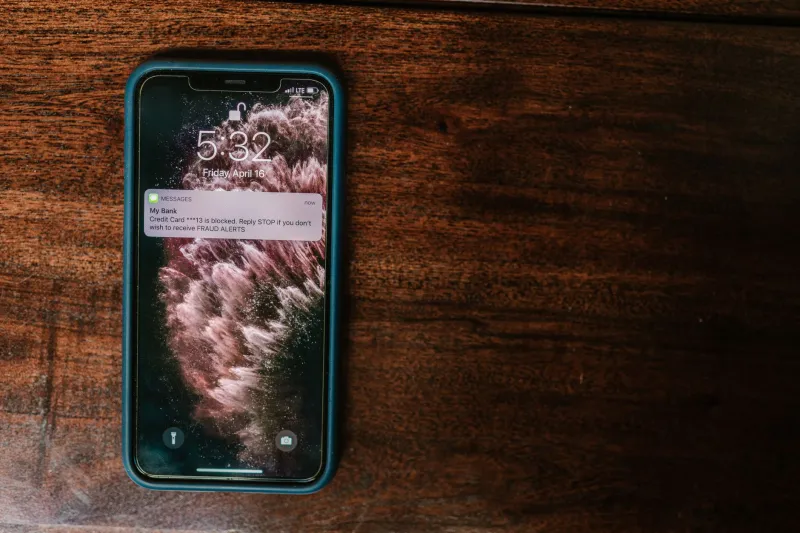
There is a specific psychological state that security researchers sometimes call "threat arousal" — a heightened, narrowly focused mode of thinking triggered when we believe something valuable is about to be lost. It is the same cognitive gear that causes drivers to run yellow lights and shoppers to grab sale items they never intended to buy. It is also, increasingly, the precise state that malicious actors and manipulative applications are designed to induce in the fraction of a second it takes a push notification banner to appear on your lock screen.
For most Americans, the smartphone notification panel has become a second inbox — one governed by far fewer instincts for caution than the email client that replaced physical mail. That gap in vigilance is now a documented attack surface.
The Architecture of a Manipulative Alert
Legitimate push notifications serve a genuinely useful purpose: they surface time-sensitive information without requiring a user to actively check an application. The problem is that the same design properties that make a notification useful — immediacy, brevity, and the implicit authority of appearing on a locked screen — also make it an exceptionally effective vehicle for manipulation.
Researchers studying persuasive technology have identified several recurring psychological levers embedded in notification language. Artificial scarcity is among the most common: alerts that announce "Only 2 spots remaining" or "Your reservation expires in 10 minutes" when no genuine constraint exists. Social proof pressure is another — notifications that reference the behavior of unnamed peers, such as "47 people are viewing this right now," to manufacture competitive anxiety. Perhaps most consequentially from a security standpoint, a growing number of alerts impersonate system-level warnings, presenting themselves as urgent account or security notices that demand immediate credential input.
The last category is where notification abuse crosses from aggressive marketing into active threat territory.
When a Banner Becomes a Phishing Hook
In 2023, the Federal Trade Commission received a significant uptick in consumer complaints describing what security professionals now categorize as "notification phishing" — a technique in which fraudulent alerts direct users to spoofed login pages designed to harvest credentials. Unlike traditional email phishing, which users have been conditioned over two decades to approach with at least some skepticism, a push notification carries the visual authority of the operating system itself. It arrives at the top of the screen with an app icon, a familiar typeface, and no visible URL.
The mechanics are straightforward. A threat actor either compromises a legitimate app's notification infrastructure, creates a malicious application that has been granted notification permissions, or — in an increasingly common variant — purchases advertising inventory within legitimate ad networks that serve interstitial alerts. The user taps the notification, is delivered to a convincing replica of a banking portal, a social media login page, or a two-factor authentication screen, and enters information that is immediately forwarded to an attacker-controlled server.
Account takeovers initiated through this pathway are particularly difficult to reverse. Because the user voluntarily entered their credentials in response to what appeared to be a security prompt, there is often no fraud-detection signal on the account provider's end. The login arrives from the user's own device, in the user's own geographic region, using the correct password.
Notification Fatigue as a Security Liability
The volume problem compounds the manipulation problem. The average American smartphone user receives between 46 and 80 push notifications per day, according to industry analytics data. At that frequency, cognitive engagement with any individual alert drops sharply. Users develop what behavioral scientists call "habituation" — the brain begins processing the notification channel as background noise, responding reflexively rather than analytically.
This is the condition that threat actors most reliably exploit. A user who has been conditioned to dismiss or quickly act on dozens of low-stakes alerts per day is poorly positioned to pause and critically evaluate the one alert that genuinely warrants scrutiny. The malicious notification does not need to be convincing under careful examination. It only needs to arrive at a moment of distraction and carry enough urgency language to short-circuit deliberate thought.
Security researchers at several academic institutions have documented that users who receive more than 50 notifications daily are measurably more likely to tap on alerts without reading them fully — a behavioral pattern that creates a reliable opening for social-engineering attacks.
Rushed Verification: The Two-Factor Authentication Problem
One of the more troubling developments in notification-based attacks involves the abuse of multi-factor authentication prompts. Many financial institutions and online platforms now send push-based MFA requests — a tap to approve or deny a login attempt. This design is convenient and, under normal circumstances, reasonably secure.
However, threat actors conducting real-time credential-stuffing attacks have begun bombarding users with repeated MFA push requests, a technique known as "MFA fatigue" or "push bombing." The goal is not to trick the user into believing the prompt is legitimate — it is to exhaust them into approving it simply to make the notifications stop. Multiple high-profile corporate breaches in recent years, including incidents affecting major technology and infrastructure companies, have been attributed in part to this technique.
The connection to notification psychology is direct: the same fatigue and reflexive-tap behavior cultivated by years of high-volume, low-stakes alerts makes users vulnerable to approving authentication requests they should deny.
Practical Measures for Reclaiming Notification Hygiene
Addressing this threat does not require technical expertise, but it does require deliberate behavioral adjustment.
Audit your notification permissions aggressively. On both iOS and Android, users can review which applications have been granted notification access and revoke it for any app that does not have a clear, ongoing need to reach them in real time. Shopping, gaming, and lifestyle applications rarely meet that threshold.
Treat urgency language as a red flag, not a cue. Any notification that employs countdown timers, scarcity claims, or language insisting you act immediately warrants additional scrutiny — not faster compliance. Legitimate security alerts from banks and account providers do not typically demand action within minutes.
Never tap directly to a login screen from a notification. If a notification appears to originate from a financial institution or account provider and directs you to enter credentials, close the notification and navigate to the service independently through a known, bookmarked URL or the official application.
Enable number-matching for MFA push prompts where available. Several major identity platforms now require users to enter a code displayed on the login screen into the authentication app, rather than simply approving a push request. This eliminates the push-bombing vulnerability by requiring active engagement with the login context.
Report anomalous notification behavior. If an application begins sending alerts that impersonate system warnings or security prompts, report the behavior to the platform's app store and, where applicable, to the FTC at ReportFraud.ftc.gov.
The Broader Pattern
The notification trap is not an isolated tactic. It is a specific expression of a broader principle that runs through nearly every social-engineering attack documented in the past decade: the most reliable way to defeat a user's security instincts is not to outsmart them, but to prevent those instincts from engaging in the first place. Speed, volume, and manufactured urgency are not incidental features of manipulative notifications. They are the mechanism.
Understanding that mechanism — recognizing the moment when an alert is attempting to narrow your thinking rather than inform it — is among the more practical defensive skills available to any smartphone user in 2024.


