Encrypted Messages, Exposed Lives: The Metadata Shadow Your Private Chats Leave Behind
When a messaging app advertises end-to-end encryption, most users reasonably conclude that their conversations are private. The marketing is compelling: only you and your recipient can read the messages. Governments cannot intercept them. The company itself claims it cannot see them. For millions of Americans, that promise feels like a digital lock on a steel door.
But security researchers and intelligence professionals have long understood a quieter truth: the content of a message is rarely the most revealing thing about it.
What Encryption Actually Protects — and What It Doesn't
End-to-end encryption (E2EE) is a genuine and meaningful technical achievement. When implemented correctly, it ensures that the text, audio, or images traveling between two parties cannot be deciphered by anyone intercepting the transmission — including the platform operator. Signal, WhatsApp, iMessage, and several other popular applications all employ some form of E2EE.
What encryption does not protect is the surrounding context of communication — commonly referred to as metadata. Metadata is, in the simplest terms, data about data. It answers the structural questions of a conversation without touching its substance:
- Who are you messaging?
- When did you send or receive a message?
- How often do you communicate with a given contact?
- How long did a call last?
- Where were you located when the message was sent?
- What device did you use?
- How large was the message or file?
None of this information requires breaking encryption. It exists at the network and platform infrastructure level, often logged as a routine operational necessity.
The Intelligence Value of Behavioral Patterns
Former NSA Director Michael Hayden stated publicly in 2014 that the U.S. government "kills people based on metadata." The remark was intended to underscore how operationally significant behavioral data had become in counterterrorism contexts. For the average American, the stakes are considerably lower — but the underlying logic is identical.
Consider what a metadata log of your messaging activity actually reveals over the course of a month. If you exchange dozens of messages with a specific contact every evening between 9 p.m. and midnight, an analyst does not need to read a single word to draw reasonable inferences about the relationship. If those communications begin abruptly, intensify, and then cease entirely, the pattern itself tells a story. Add location data — two phones pinging the same cell tower repeatedly — and the narrative becomes substantially more detailed.
Researchers at Stanford University demonstrated this principle in a study analyzing call metadata collected under a prior NSA program. Using only phone numbers, call durations, and timestamps — no call content whatsoever — participants were able to identify individuals managing sensitive medical conditions, engaging in political organizing, and conducting personal relationships they had not disclosed publicly. The content was never needed.
Which Popular Apps Leak the Most
Not all encrypted messaging applications treat metadata with equal care. The differences are significant and, for privacy-conscious users, worth understanding.
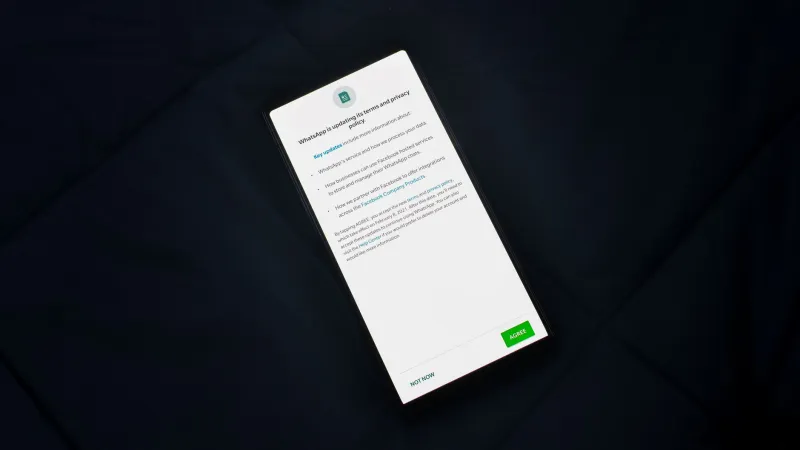
WhatsApp, owned by Meta, uses the Signal encryption protocol for message content — a well-regarded technical implementation. However, WhatsApp collects and retains substantial metadata, including contact lists, usage frequency, device identifiers, IP addresses, and diagnostic data. This information is shared within Meta's broader advertising and data ecosystem. The message text is protected; the behavioral fingerprint around it is not.
iMessage encrypts content between Apple devices but logs metadata on Apple's servers, including sender and recipient identifiers and timestamps. Apple's iCloud backup feature, if enabled, can store message content in a form that is accessible to Apple and, by extension, to law enforcement with a valid legal request — a nuance many users overlook entirely.
Signal is widely regarded as the most metadata-conscious of the major platforms. The application is designed to minimize server-side data retention. In response to multiple federal subpoenas, Signal has demonstrated that it retains only two data points per account: the date the account was created and the date it last connected to the service. Signal also offers features such as sealed sender — a technical measure that obscures even the sender's identity from Signal's own servers — and disappearing messages. It is not metadata-proof, but it represents a meaningfully different approach than its competitors.
Telegram, frequently marketed as a privacy-first application, does not apply end-to-end encryption by default. Standard chats are encrypted in transit but stored on Telegram's servers in a form the company can access. Only "Secret Chats" employ E2EE, and many users are unaware of the distinction.
The Legal Dimension: When Metadata Becomes Evidence
In the United States, metadata enjoys substantially weaker legal protection than message content. Under the third-party doctrine — a legal principle rooted in a 1979 Supreme Court decision — information voluntarily shared with a third party, such as a telecommunications provider or platform operator, generally carries a reduced expectation of privacy. This means law enforcement agencies can often obtain metadata records through a subpoena or court order rather than the more demanding probable-cause standard required for a wiretap warrant.
The 2018 Carpenter v. United States Supreme Court decision narrowed this doctrine somewhat with respect to cell-site location data, requiring a warrant for extended historical location records. However, the ruling was deliberately limited in scope, and the broader metadata landscape remains largely accessible to investigators through standard legal process.
For ordinary users, this creates a meaningful gap between the privacy they believe they have and the privacy they actually possess.
Practical Steps for Reducing Your Metadata Exposure
No consumer application eliminates metadata risk entirely. However, informed users can meaningfully reduce their exposure through deliberate choices.
Use Signal where privacy matters most. Its architecture is specifically designed to minimize what the platform retains, and its track record under legal compulsion is publicly documented.
Disable iCloud backups for iMessage if you use an iPhone and are concerned about content accessibility. Encrypted messages stored in unencrypted backups represent a straightforward vulnerability.
Be selective with location services. Many messaging applications request location permissions that are not necessary for core functionality. Reviewing and restricting these permissions through your device's settings limits the geographic data attached to your communications.
Understand that contact graphs are sensitive. Who you communicate with — your network of contacts — can be as revealing as what you say. Be thoughtful about which applications have access to your full contact list.
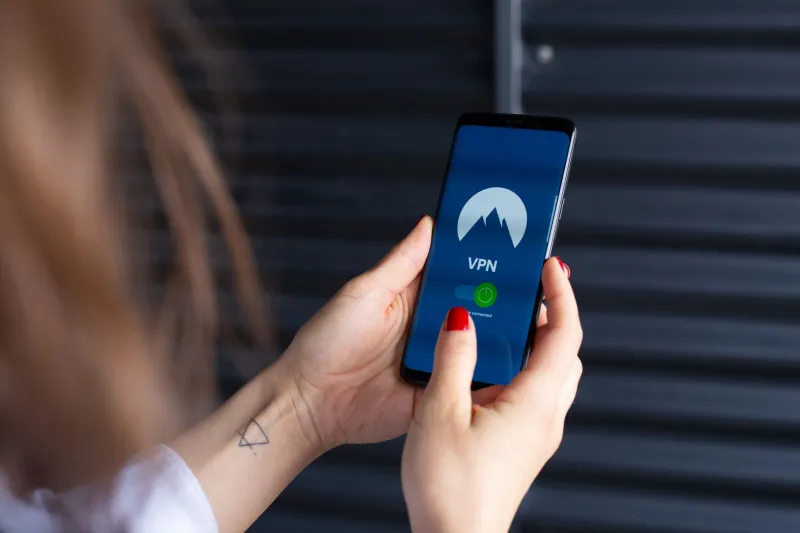
Use a reputable VPN service to mask your IP address from platform servers, reducing the location data associated with your account activity. A VPN does not make you anonymous, but it adds a meaningful layer of separation.
The Honest Conversation the Industry Avoids
The gap between what encryption marketing promises and what it actually delivers is not a conspiracy — it is a consequence of technical complexity being reduced to consumer-friendly language. "End-to-end encrypted" is a factually accurate statement about message content. It says nothing about the behavioral record that surrounds every conversation.
Privacy-conscious consumers deserve a more complete picture. Encryption is a critical and valuable tool, and using it is far preferable to not using it. But treating it as a comprehensive privacy solution — rather than one important layer among several — leaves users with a false sense of security that sophisticated adversaries, whether commercial or governmental, are well-positioned to exploit.
The message may be locked. The life it reflects, for now, remains considerably more visible.