Permanently Compromised: The Hidden Fragility of Fingerprint and Facial Authentication
For the better part of a decade, the technology industry has promoted biometric authentication as the logical successor to the password. Unlock your phone with a glance. Authorize a payment with a touch. The pitch is elegant: your body becomes your credential, and no credential is more personal than that. What the marketing rarely discloses, however, is the catastrophic downside lurking beneath that convenience — one that security researchers have been documenting with increasing alarm.
Unlike a password, a fingerprint cannot be changed. Unlike a PIN, a face cannot be reissued. When biometric data is stolen, the breach is not an inconvenience to be remedied with a reset link. It is, in a meaningful sense, permanent.
How Biometric Data Is Captured and Stored
To understand the risk, it helps to understand what actually happens when you enroll a fingerprint or facial scan on a device or platform. The raw biometric is typically converted into a mathematical template — a numeric representation of the unique features of your face or fingertip — and that template is stored either on the device itself or, in many enterprise and government applications, in a centralized database.
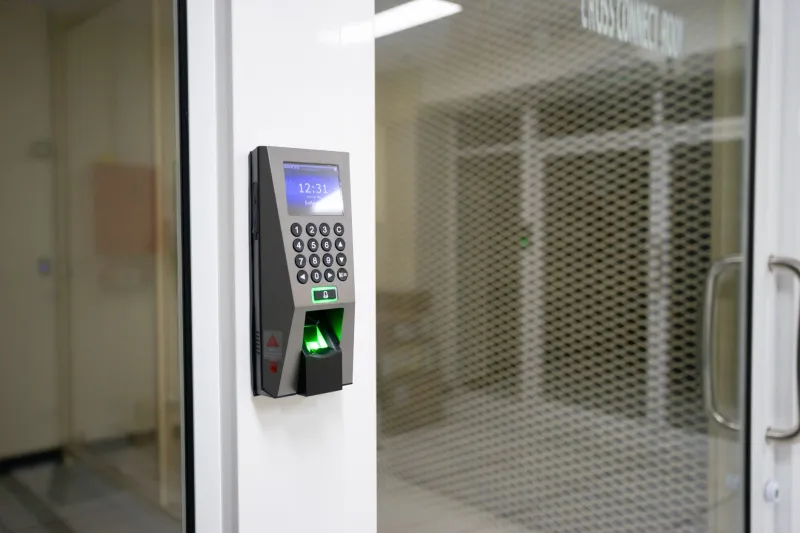
Device-side storage, the approach used by Apple's Face ID and most modern Android fingerprint implementations, is generally considered the more secure architecture. The template never leaves the device's secure enclave, a hardened chip designed to resist tampering. But not every system is built this way. Employers, airports, healthcare networks, and government agencies frequently rely on centralized biometric databases — and those databases have proven to be attractive, and vulnerable, targets.
The most consequential example in U.S. history remains the 2015 breach of the Office of Personnel Management, in which attackers — later attributed to Chinese state-sponsored actors — exfiltrated the fingerprint records of approximately 5.6 million federal employees and contractors. Those individuals cannot change their fingerprints. Years later, the exposure endures.
Spoofing: The Art of Fooling a Scanner
Beyond database theft, biometric systems face a second category of threat: spoofing, or the use of fabricated physical artifacts to deceive a sensor into granting access.
Fingerprint spoofing has been demonstrated repeatedly in controlled and real-world settings. Researchers have used materials as accessible as gelatin, silicone, and high-resolution inkjet prints to fool capacitive fingerprint sensors. A 2019 study from Michigan State University demonstrated that so-called MasterPrint attacks — synthetic fingerprints engineered to partially match a large number of real prints — could defeat smartphone scanners with unsettling regularity, exploiting the fact that most sensors read only a partial fingerprint at any given time.
Facial recognition presents its own spoofing surface. Two-dimensional systems — still common in budget Android devices and many enterprise access-control installations — can be defeated with a photograph. More sophisticated three-dimensional systems, like Face ID, are considerably harder to fool, but researchers at universities and private security firms have demonstrated bypass techniques using detailed 3D-printed masks and, more recently, adversarial inputs crafted with machine learning. As generative AI matures, the cost and technical barrier to producing convincing facial replicas continues to fall.
The Permanence Problem
What distinguishes a biometric breach from virtually every other category of credential theft is its irreversibility. When a password database is compromised, the remediation playbook is straightforward: force a reset, notify affected users, and move on. When biometric templates are exfiltrated, no equivalent remedy exists.
This permanence creates a compounding risk profile that security professionals describe as a long tail of exposure. A stolen fingerprint template from a breach that occurred in 2018 remains just as actionable in 2025 as it was the day it was taken. If the same template is used across multiple systems — an employer's access-control platform, a banking application, a government benefits portal — a single upstream breach effectively undermines every downstream system that relies on it.
The problem is further complicated by the fact that most Americans have little visibility into where their biometric data has been enrolled. A fingerprint provided to a staffing agency five years ago, or a facial scan captured during onboarding at a former employer, may persist in systems the individual has long since forgotten — and has no mechanism to audit or delete.
Liveness Detection and Its Limits
The industry's primary technical countermeasure to spoofing is liveness detection — algorithms designed to distinguish a live human from a photograph, mask, or replay attack. Modern implementations analyze micro-expressions, skin texture under infrared light, blood flow patterns, and behavioral cues like the involuntary movement of the eye.
These systems have improved substantially, but they are not impenetrable. Security researchers have demonstrated that sufficiently sophisticated adversaries — including nation-state actors and well-resourced criminal organizations — can defeat liveness detection under the right conditions. More practically, liveness detection is only as robust as its implementation, and the quality of that implementation varies enormously across vendors, particularly in the enterprise and government sectors where procurement cycles are slow and legacy systems persist.
What Users Can Do
None of this is an argument for abandoning biometric authentication outright. For most consumers, Face ID or a fingerprint sensor remains a meaningful security upgrade over a four-digit PIN or no lock at all. The risk calculus shifts considerably, however, when biometrics are used as the sole authentication factor for high-value accounts — financial, medical, or government-related — or when they are enrolled in third-party systems with opaque data-retention practices.
A few practical considerations for U.S. consumers:
Treat biometrics as a convenience layer, not a security foundation. Where possible, pair biometric authentication with a strong alphanumeric password or a hardware security key. Biometrics are excellent at proving presence; they are less reliable at proving identity under adversarial conditions.
Audit your biometric enrollments. Many Americans are unaware of how many systems hold their biometric data. Review the privacy settings and data-deletion options for any employer, healthcare provider, or service that requested a fingerprint or facial scan.
Understand your state's legal protections. Illinois, Texas, Washington, and a growing number of other states have enacted biometric privacy laws that impose obligations on organizations collecting this data, including retention limits and consent requirements. Knowing your rights is the first step to exercising them.
Monitor for breach notifications. Services like the Identity Theft Resource Center and Have I Been Pwned track known data exposures. While biometric template breaches are not always disclosed with the specificity of password dumps, staying informed about breaches affecting organizations that hold your data is essential.
The Credential You Cannot Revoke
The security industry spent years convincing users that passwords were the weakest link in the authentication chain — and in many contexts, that argument was sound. But the rush to replace passwords with biometrics introduced a different category of fragility, one that the industry has been slower to acknowledge.
A compromised password is a problem to be solved. A compromised fingerprint or facial map is a condition to be managed, indefinitely, across every system that ever enrolled it. That distinction matters enormously, and it deserves far more candor from the platforms, employers, and agencies that continue to collect this data at scale — often without adequate disclosure of what happens when, not if, their systems are breached.